What Support Gets Asked About Chicken Road 2 Every Day
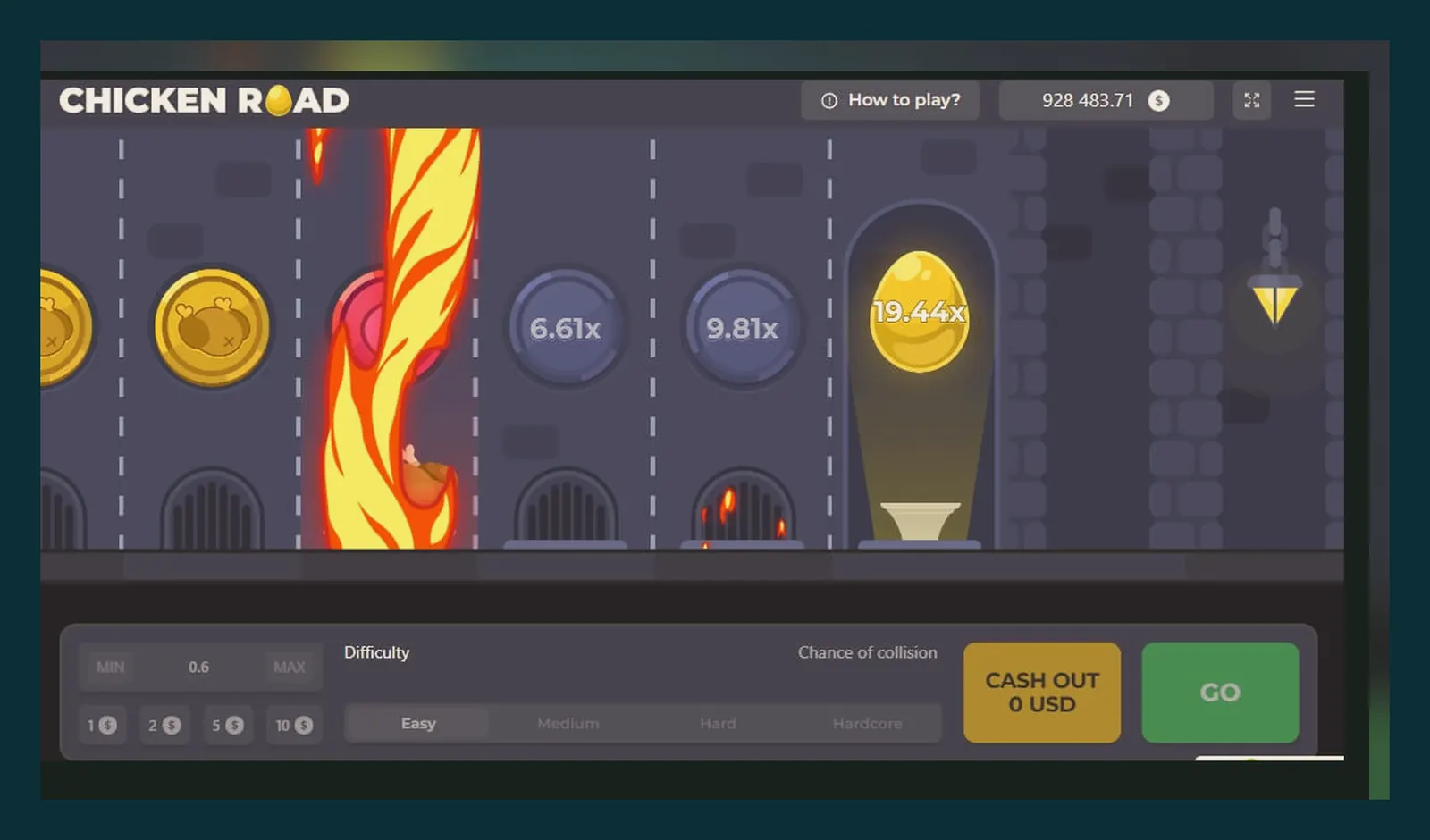
The most common question in support isn't about the rules — it's «How do I know I'm on the real game?» Fair. Crash-style releases get cloned fast, and a fake build can tweak the RTP or skip certification altogether.
Chicken Road 2 is a grid-based crash game from an established studio, certified for remote gambling and running on UKGC-licensed casinos. You pick a difficulty, click tiles to reveal a safe path, and cash out before you hit an obstacle. The multiplier climbs with every safe step; one wrong tile ends the round. This page walks through who made it, how the maths actually work, which clones are out there, and the ten-second footer check that confirms you're playing the certified original.
Who Built It and Where the Certification Sits
Chicken Road 2 comes from a studio that supplies crash and instant-win content to regulated operators. The game holds a certificate from an accredited testing lab — typically iTech Labs or Gaming Laboratories International — covering RNG fairness, stated RTP, and payout logic. That certificate number lives in the game's info panel or the operator's game library; legitimate sites publish it because the UKGC expects transparency.
The original runs in HTML5, which means browser play on desktop and mobile without a download. Some operators wrap it in a progressive web app for an home-screen shortcut, but the core build is the same. If a site asks you to install an APK or download a standalone .exe, that's not the official distribution — the real game streams through the casino platform.
How a Round Actually Runs From Your Seat
You pick a difficulty level — easy, medium, or hard — which sets how many obstacles hide in the 5 × 5 grid and how fast the multiplier climbs. Stake anything from £0.10 to £5.00 under UKGC caps; if you're 18 to 24, the cap drops to £2.00 per round. Place the bet, and the grid goes live.
- Click a tile. If it's safe, it flips green and your multiplier ticks up — 1.10×, 1.25×, 1.50×, climbing faster on higher difficulties.
- Pick another tile. The multiplier keeps rising with each safe reveal. You can cash out at any moment and bank stake × current multiplier.
- Hit an obstacle and the round ends instantly; your stake is lost. The game shows which tiles were safe and which held traps, so you can see how close you were.
There's no timer and no auto-play. Every click is manual, and you control when to walk away. The longer you push, the higher the multiplier — and the thinner the margin. On hard difficulty, one safe path might thread through twenty-odd obstacles; on easy, you have more room but lower multipliers.
The Real Numbers From the Technical Sheet
RTP is the long-run average; on a high-volatility game, you'll see streaks where you clear six tiles in a row and streaks where you hit an obstacle on tile two five rounds running. The RNG doesn't owe you a win after a loss — every round is independent. Max win of 1,000× means a £5.00 stake tops out at £5,000.00 if you clear the hardest grid, but the probability of threading that path is fractional.
Mechanics Unpacked: Difficulty, Multipliers, and the Cash-Out Window
Difficulty changes two variables: obstacle density and multiplier curve. On easy, maybe eight tiles out of twenty-five are traps, and each safe step adds 0.10× to 0.15×. On hard, eighteen tiles might be traps, and safe reveals jump 0.25× or more. The tighter the path, the faster the multiplier climbs — but one misclick ends it.
The cash-out button is live from the moment you flip the first safe tile. Click it and the round settles at stake × current multiplier; the funds hit your balance instantly. If you don't cash out and the next tile is an obstacle, the multiplier resets to zero and the stake is gone. There's no insurance, no buy-back, no second chance.
- The grid doesn't rearrange mid-round. Obstacle positions are set when you place the bet, seeded by the RNG and hashed so the outcome is provably fair if the operator publishes the server seed.
- You can't see which tiles are safe until you click them. The game doesn't give hints or highlight likely traps; every unopened tile has the same risk from your perspective.
- Some operators show a live leaderboard of recent big wins. That's social proof, not strategy — those players got lucky on a low-probability path, and the RNG won't repeat it for you.
Clones, Reskins, and How They Differ From the Original
Unlicensed sites clone the Chicken Road concept by rebuilding the grid UI and calling it something close: Chicken Run, Rooster Road, Bird Path. The layout looks similar — five-by-five grid, multiplier counter, cash-out button — but the back end is different. Clones skip lab certification, so there's no independent check that the RTP matches the stated figure or that the RNG is fair.
| Feature | Original | Typical clone | |
|---|---|---|---|
| Studio & cert | Named provider, iTech / GLI certificate | Anonymous or fake studio name | → |
| RTP verification | Lab-tested, published in game info | Claimed but not certified | → |
| Provably fair | Server seed published, verifiable | Often missing or fake hash | → |
| UKGC licence | Operator in public register, footer licence number | No UK licence, offshore registration | → |
| Stake caps | £5.00 / £2.00 enforced | No caps or inconsistent enforcement | → |
Some clones up the max multiplier to 5,000× or 10,000× to look more generous, but without certification there's no proof the game can actually pay it. Others drop the RTP to 94 % or lower and keep the interface identical. You won't know until you've played long enough to notice the hit rate is off.
The Ten-Second Check That You're on the Real Build
- Scroll to the footer. Every UKGC-licensed site must display its remote gambling licence number — a string starting with 000- followed by digits. Copy it.
- Go to the Gambling Commission's public register at gamblingcommission.gov.uk, paste the number, and confirm the operator name matches the site you're on.
- Open the game info panel (usually a small « i » icon in the corner). Look for the studio name, RTP figure, and certification details. If they're missing or vague — « Licensed in Curaçao, RTP 96 % » — that's not the original.
- Check the URL. The game should load from the operator's own domain or a CDN tied to the provider. If it redirects to a no-name .com or an IP address, close the window.
If the site isn't in the UKGC register, it's illegal to offer real-money play to British residents, and you have no protection under UK law. Unlicensed operators can refuse withdrawals, alter game outcomes, or disappear overnight. The ten seconds it takes to check the register is the simplest insurance you'll get.
Where the Original Runs for a UK Player
The certified build appears on UKGC-licensed casino sites that carry the provider's portfolio. You'll find it in the « Instant Win » or « Crash Games » category, alongside titles like Aviator, Mines, and Plinko. Stake caps, affordability checks, and GAMSTOP blocks apply the same way they do on slots — the game is subject to every remote gambling rule in force.
Withdrawals follow the operator's standard process: e-wallets in a few hours to a day, Faster Payments to your bank in one to two working days, debit-card refunds in one to three. First withdrawal takes longer because of KYC — proof of ID, proof of address, sometimes a selfie or a video call. That's not the game's doing; it's anti-money-laundering law. Budget twenty-four to forty-eight hours for document review.
- Bonuses usually come with wagering requirements — 30× to 40× is typical. If you claim a deposit match and play Chicken Road 2, expect the bonus funds to convert slowly; crash games often contribute 10 % to 20 % toward wagering, compared to 100 % on slots.
- Credit cards have been banned for gambling since April 2020. You can deposit by debit card, PayPal, Apple Pay, Trustly, or paysafecard, but the payment method must be in your own name.
- Winnings are tax-free for the player. Operators pay Remote Gaming Duty — raised to 40 % in April 2026 — but that doesn't come out of your balance.
If you've self-excluded through GAMSTOP, the game is blocked across every UKGC site for the duration you chose — six months to five years. There's no backdoor, no « sister site » loophole. For help with problem gambling, BeGambleAware offers free support; look for the link in every licensed operator's footer.
FAQ
Can I play Chicken Road 2 in demo mode without signing up?
Most UKGC-licensed sites now require you to create an account and pass age verification before demo play unlocks — that's a regulatory tightening to prevent under-18 access. Once you're verified, free play is usually available with no deposit needed. If a site offers open demo with zero checks, it's probably unlicensed.
What's the actual difference between easy, medium, and hard difficulty?
Difficulty changes obstacle density and multiplier speed. Easy mode scatters fewer traps across the grid, so you have more safe tiles to choose from, but each safe reveal adds a smaller increment to your multiplier. Hard packs the grid with obstacles, leaving a narrow safe path, and rewards each correct pick with a steeper multiplier jump. Higher difficulty means higher volatility — bigger potential wins, higher chance of early elimination.
If I hit five safe tiles in a row, am I due for an obstacle on the sixth?
No. Every tile reveal is independent; the RNG doesn't balance your luck round-to-round or within a single round. The grid is set when you place the bet, and obstacle positions don't shift based on your prior picks. A run of safe tiles doesn't make the next one more likely to be a trap — that's gambler's fallacy, and the maths don't work that way.
Why does the first withdrawal take so long when the game settles instantly?
The game credits your balance the moment you cash out, but the operator's KYC process kicks in before your first withdrawal. UK law requires proof of identity, proof of address, and verification that the payment method is in your own name. Document review typically takes twenty-four to forty-eight hours. After that first payout, subsequent withdrawals are faster — e-wallets in a few hours, Faster Payments in a day or two.